

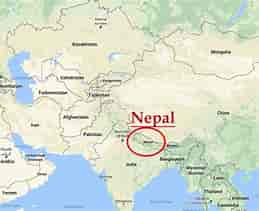
Nepal is voting today in a high-stakes national election — the first since last year’s Gen-Z-led protests that toppled the government and left at least 77 people dead. The election will replace the interim administration led by Sushila Karki and is widely being viewed as a referendum on Nepal’s political establishment, often referred to as the country’s “Old Guard.”
Why This Election Is Significant
The 2026 election marks a critical political reset for Nepal:
- It follows mass youth-led protests in 2025.
- It comes amid widespread public frustration over governance, economic challenges, and political instability.
- It tests whether established leaders can retain public trust.
- It measures the rise of new, youth-driven political forces.
For many observers, this vote represents a generational political transition moment.
Background: What Triggered the Protests?
In 2025, widespread demonstrations led largely by Generation Z activists erupted across Nepal. Protesters accused the political leadership of:
- Corruption
- Governance failures
- Economic stagnation
- Lack of youth representation
The unrest ultimately led to the fall of the sitting government and the formation of an interim administration under Sushila Karki.
Who Are the Key Political Figures?
The “Old Guard”
Several long-standing political leaders are contesting:
- Sher Bahadur Deuba – Leader of the Nepali Congress
- KP Sharma Oli – Leader of Communist Party of Nepal (Unified Marxist–Leninist) (CPN-UML)
- Pushpa Kamal Dahal – Leader of Communist Party of Nepal (Maoist Centre)
These leaders have dominated Nepal’s politics for over a decade. However, they now face mounting anti-incumbency sentiment.
The Rising Youth Challenge
A new wave of younger politicians is attempting to reshape Nepal’s political narrative.
- Rabi Lamichhane – Leader of the Rastriya Swatantra Party (RSP), known for his anti-establishment appeal.
- Balendra Shah, a 35-year-old rapper-turned-politician and former Kathmandu mayor, is challenging KP Sharma Oli in Jhapa-5. Shah has positioned himself as a symbol of youth-driven reform politics.
- Gagan Thapa, 49, the new head of Nepali Congress, is contesting from Sarlahi-4 in southern Nepal and is seen as a bridge between traditional and reformist politics.
What Are Voters Electing?
Nepal’s voters will elect 275 members to the House of Representatives, the lower house of parliament:
- 165 seats through the First-Past-The-Post (FPTP) system
- 110 seats through Proportional Representation (PR)
The outcome will determine the formation of the next government.
Logistical Challenges
Nepal’s geography makes election management uniquely complex:
- Ballot materials have been transported to remote, snowbound areas.
- The country is home to eight of the world’s ten highest peaks, including Mount Everest.
- Voting stations span mountainous, rural, and urban regions.
Officials have said preparations were completed ahead of polling day.
What Happens Next?
- Counting may take several days.
- If no party wins a clear majority, coalition negotiations could delay government formation.
- Political instability could continue if alliances prove fragile.
Nepal has experienced frequent coalition governments in recent years, and the possibility of prolonged negotiations remains high.
Why the Election Matters Regionally
Nepal sits strategically between India and China. Political stability in Kathmandu has broader implications for:
- Regional diplomacy
- Trade and transit agreements
- Security cooperation
- Cross-border economic flows
A decisive mandate could stabilize policymaking. A fractured outcome may extend uncertainty.
Conclusion By Factcheck India
The 2026 Nepal election is more than a routine democratic exercise. It is a test of whether traditional political leaders can retain control in the face of youth-driven reform demands. As votes are cast across the Himalayan nation, the outcome may signal whether Nepal moves toward generational political change or reaffirms its established leadership structure. Full results are expected in the coming days.