

Introduction
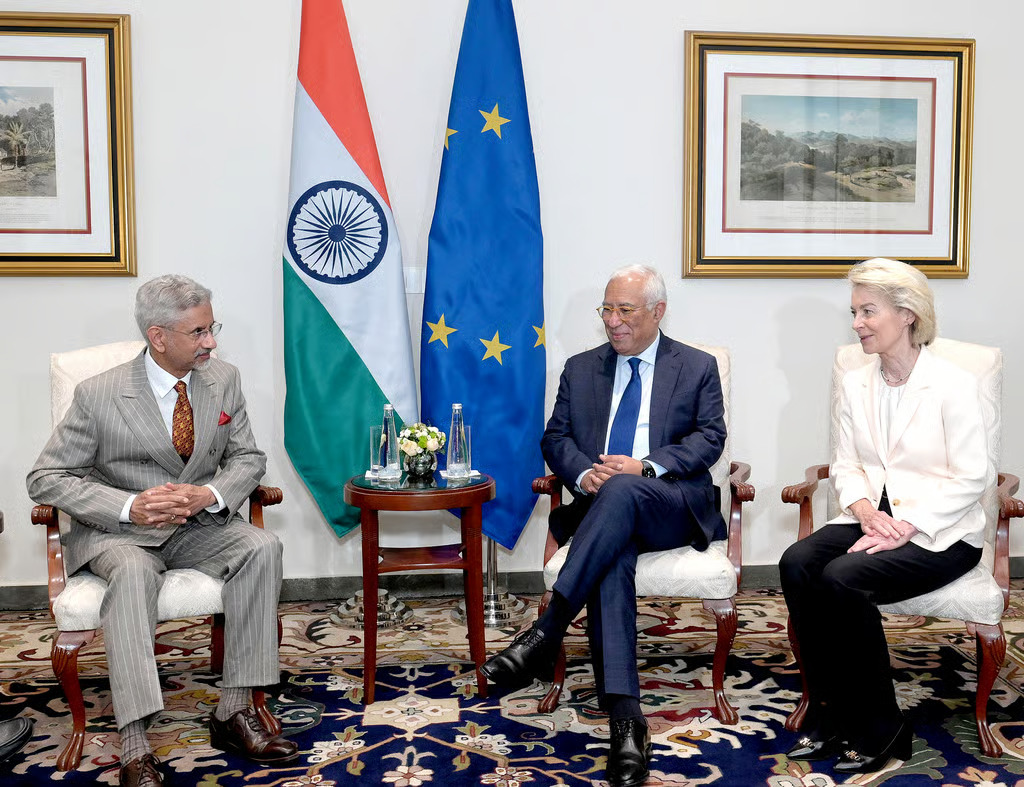
India is looking to significantly strengthen its relationship with the European Union (EU) as global tensions—especially the ongoing Iran conflict—reshape geopolitical priorities. External Affairs Minister Subrahmanyam Jaishankar has said that India sees this moment as a turning point in its ties with Europe, with plans to expand cooperation in trade, defence, and strategic sectors.
What Is Driving This Shift?
The push to deepen India–EU ties comes at a time of heightened global instability, particularly due to the ongoing conflict involving Iran, Israel, and the United States.
India has major stakes in the region:
- Energy security, as much of India’s oil passes through West Asia
- Trade routes, especially via the Strait of Hormuz
- The safety of millions of Indians living and working in the Gulf
Jaishankar described the situation as “deeply concerning,” highlighting how regional instability can directly impact India’s economy and strategic interests.
The Trade Deal: More Than Just Economics
Earlier this year, India and the EU signed what has been described as a major trade agreement, with leaders like Ursula von der Leyen and António Costa visiting India for high-level talks.
But according to Jaishankar, this deal is “much bigger” than a typical trade pact.
Key goals include:
- Expanding market access for businesses
- Strengthening economic integration
- Building long-term strategic alignment between India and Europe
India also hopes to address concerns around the EU’s Carbon Border Adjustment Mechanism (CBAM), which could impact Indian exports.
Growing Defence and Security Cooperation
A major new focus is defence collaboration.
India is exploring:
- A security of information agreement with the EU
- Joint work on defence manufacturing
- Potential deals for ammunition, drones, and counter-drone systems
For example, partnerships with companies like Airbus signal a move toward deeper industrial cooperation. The idea is to create an environment where Indian and European firms can collaborate without regulatory or political barriers.
The Russia Factor
One challenge in India–EU relations is India’s continued engagement with Vladimir Putin and its purchase of Russian energy despite Western sanctions. India has maintained what it calls a “balanced and objective” position, engaging with both Russia and Ukraine diplomatically. Prime Minister Narendra Modi is among the few global leaders to have interacted with both Moscow and Kyiv since the war began. While this may draw criticism from Europe, both sides appear willing to “de-risk” their relationship and focus on shared interests.
India’s Balancing Act in the Iran Conflict
Despite pressure from global powers, India has avoided taking sides in the Iran conflict. Jaishankar has been in contact with Iranian Foreign Minister Abbas Araghchi, emphasising:
- The need for de-escalation
- Concerns over energy disruptions
- The safety of Indian nationals in the region
India’s approach reflects its broader strategy of “strategic autonomy”—maintaining relationships with multiple global powers without aligning fully with any one bloc.
Conclusion
India’s push to deepen ties with the EU signals a shift toward stronger engagement with Europe in a rapidly changing global order.
Key takeaways:
- The India–EU partnership is evolving beyond trade into a strategic alliance
- Defence and technology cooperation are becoming central
- Global crises, especially in West Asia, are accelerating this shift
- India continues to balance ties with the EU, the US, and Russia simultaneously
As geopolitical tensions rise, India is positioning itself as a key global player navigating multiple alliances, with the EU emerging as a crucial partner in that strategy.