

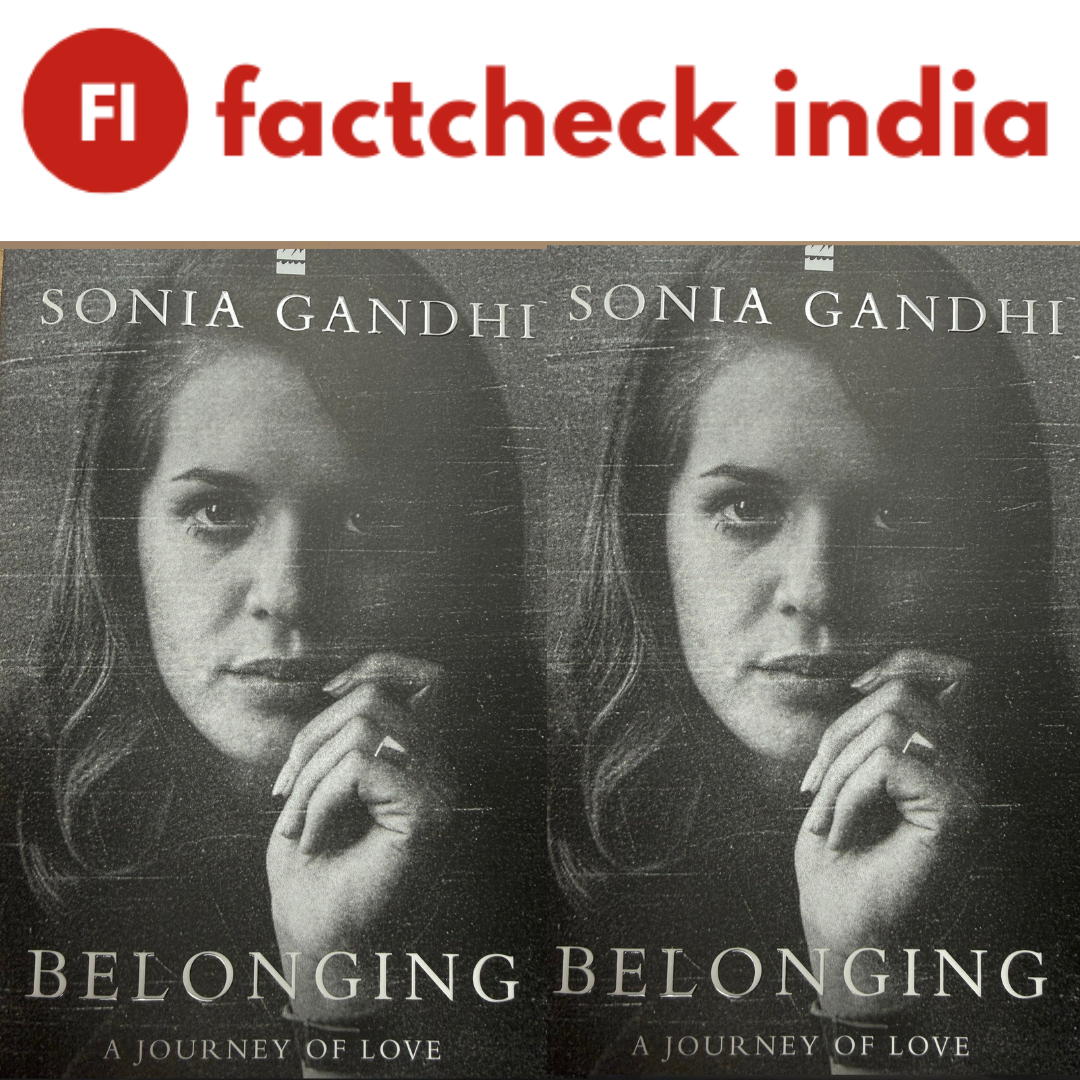
1. Sonia Gandhi says she has had virtually no real contact with Narendra Modi
One of the significant observations in Belonging concerns the relationship between Sonia Gandhi and Prime Minister Narendra Modi.
Gandhi writes that she has had “practically no real contact” with Modi during his 12 years in power. She recalls that when they have been in the same room, he has tended to avoid eye contact. On some occasions, he has briefly enquired about her health following a hospital stay.
She contrasts this with an earlier political culture in which leaders from opposing parties maintained cordial relationships despite their ideological differences.
Gandhi recalls that following the 2001 Parliament terror attack, she immediately called then Prime Minister Atal Bihari Vajpayee to enquire about his safety. Vajpayee appreciated the gesture, she writes.
According to Gandhi, political discourse has become increasingly hostile, with those in power seeking to belittle and torment their opponents. She also refers to the ridicule directed at her son, Rahul Gandhi, by the BJP, which has used the derogatory nickname “Pappu” to portray him as inexperienced and naive.
She observes that this trend is not limited to India, drawing a comparison with US President Donald Trump’s use of personal insults against political opponents.
2. Why does Sonia Gandhi describe political leadership as lonely for women?
Although India has had women occupy some of its highest political offices, Sonia Gandhi’s memoir highlights the isolation they can experience in a male-dominated political environment.
The book recalls a conversation Gandhi had with former US Secretary of State Hillary Clinton in 2012 about women leaders and their experiences.
Reflecting on her mother-in-law, former Prime Minister Indira Gandhi, Sonia writes that despite wielding considerable political authority, Indira could feel besieged and profoundly alone.
According to her recollections, this isolation was particularly pronounced in the months leading up to Indira Gandhi’s declaration of the Emergency in June 1975.
Sonia also discusses her own experience of loneliness, particularly when she decided to take charge of the Congress party. She describes the decision as one driven by a sense of responsibility towards her family’s political legacy.
The memoir therefore explores the personal pressures that can accompany political leadership, particularly for women operating within established political structures.
3. How does the memoir examine the relationship between the media and political power?
Another major theme in Belonging is the changing relationship between journalists and those holding political office.
Sonia Gandhi recalls a period when journalists had opportunities to question prime ministers directly. She contrasts that experience with Prime Minister Narendra Modi’s media interactions during his 12 years in office.
4. Why has the publication of the memoir raised questions about freedom of expression?
The circumstances surrounding the publication of Belonging have also brought attention to concerns about the space available for criticism and independent expression in India.
Penguin Random House India had initially been expected to publish the memoir but withdrew from the project in August.
The memoir was released in the United States by Alfred A. Knopf and is being published in India by HarperCollins.
The controversy has also drawn comparisons with an earlier publishing dispute involving journalist and cartoonist Joe Sacco’s graphic book The Once and Future Riot, which examines the 2013 Muzaffarnagar communal violence.
Penguin had withdrawn from plans to distribute the book in June. The publisher cited concerns about an inaccurate map of India and unresolved citation issues. Sacco, however, attributed the decision to what he described as the prevailing political climate in the country.
These disputes have renewed attention to questions about editorial independence, publishing decisions and whether concerns about political repercussions can influence the publication of critical material.
5. What does the memoir reveal about political disagreements and strained relationships?
It contrasts the approach taken by Indian political memoirs with some Western examples, in which former heads of government and senior politicians have openly criticised political colleagues and former allies.
One example cited is former British Prime Minister David Cameron’s 2019 memoir, For the Record. In the book, Cameron criticised his former political ally Michael Gove, using strongly negative descriptions of him.
What does Sonia Gandhi’s memoir tell us about India’s political evolution?
Beyond its account of personal loss and family history, Belonging offers Sonia Gandhi’s perspective on nearly six decades of political change in India.
The memoir revisits several defining episodes, including the Emergency imposed by Indira Gandhi in June 1975. During the 21-month period, civil liberties were suspended, political opponents were jailed and press freedom was restricted. Sonia also describes how the Emergency created a rift within the family.
Other personal recollections include the loss of her first child shortly after birth, the discovery of grenades in a room of the family home following Operation Blue Star in 1984, and the assassinations of Indira Gandhi in 1984 and Rajiv Gandhi in 1991.
Taken together, these experiences connect the Gandhi family’s personal history with major political developments in the country.
The memoir’s central themes include political polarisation, the isolation of women leaders, the relationship between the media and political power, and concerns about freedom of expression. While it presents Sonia Gandhi’s personal perspective rather than a comprehensive account of every political episode, it provides an insider’s view of the changes she says she has witnessed in India’s political landscape.