

Overview
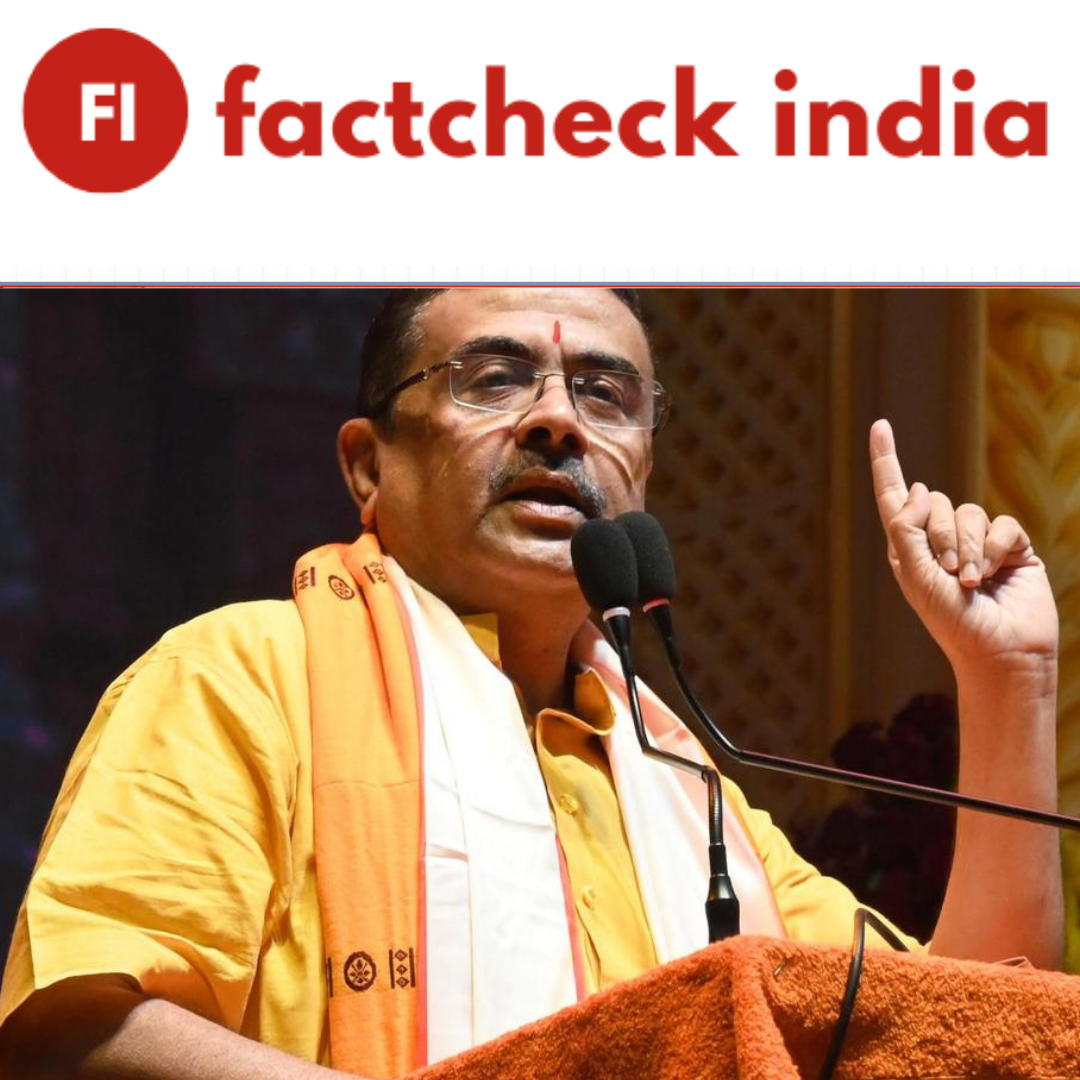
A political controversy has emerged in West Bengal following allegations by State Bharatiya Janata Party (BJP) president Samik Bhattacharya that a teacher at a Kolkata Christian missionary school was questioned for wearing a saffron saree. Speaking to reporters, West Bengal Chief Minister Suvendu Adhikari stated that the state government will verify the facts and take action—including revoking the school’s No-Objection Certificate (NOC)—if institutional wrongdoing is substantiated. Meanwhile, Christian organizations and school representatives have rejected the allegations, calling for specific legal evidence rather than generalized accusations against minority-run institutions.
Timeline of Key Developments
Initial Allegations Raised
November 15, 2026
West Bengal BJP president and Rajya Sabha MP Samik Bhattacharya warns Christian missionary schools in the state, alleging that a teacher was questioned for wearing a saffron saree and claiming that religious conversions are increasing in tribal areas.
Chief Minister Pledges Fact Verification
November 17, 2026
Addressing the media in Murshidabad, Chief Minister Suvendu Adhikari states that the government will verify the claims and take action against individuals—or revoke an institution’s NOC—if a written complaint proves institutional involvement.
Christian Organizations & Schools Respond
November 18, 2026
Bangiya Christiya Pariseba issues a statement questioning why legal action hasn’t been taken against specific perpetrators if illegal conversions exist, while the West Bengal Association of Christian Schools denies having dress-code restrictions.
Perspectives & Key Arguments
| Stakeholder | Core Position & Statements |
| Samik Bhattacharya (WB BJP President) | Stated he formally raised the dress-code issue with Chief Minister Suvendu Adhikari; alleged that religious conversions are rising in regions such as Purba Bardhaman, Asansol, and Kalimpong, while asserting that the BJP has no objection to Christians practicing their faith. |
| Suvendu Adhikari (Chief Minister, West Bengal) | Committed to verifying the claims. Stated that if a written complaint establishes individual misconduct, action will follow against that person, and if an institution is found complicit, its NOC will be withdrawn. |
| West Bengal Association of Christian Schools | A representative stated there are no dress restrictions on staff members in Christian missionary institutions and cautioned against generalizing an unverified allegation across all missionary schools. |
| Bangiya Christiya Pariseba (BCP) | State working president Surbir Sarkar questioned why authorities have not identified or prosecuted specific individuals under the law if illegal conversions are occurring, and criticized what the group described as silence over vigilante attacks on prayer meetings. |
Context & Governance Implications
The dispute centers on two sensitive policy intersections in West Bengal: the administrative autonomy of minority-run educational institutions and allegations surrounding religious conversions in tribal belts.
Under Indian constitutional and educational frameworks, private and minority-run schools operate under state-issued No-Objection Certificates (NOCs) and affiliation rules, meaning any administrative action requires formal complaints and documented inquiry. At the same time, civil society and Christian groups have emphasized due process—arguing that allegations of unlawful conversion or workplace discrimination must be addressed through formal legal complaints and evidence-based prosecution rather than broad public warnings.
Conclusion
As of November 19, 2026, the West Bengal government has committed to verifying whether any formal complaint substantiates the claim regarding the Kolkata school. While political leaders have framed the issue around administrative accountability and demographic concerns in tribal regions, school associations and Christian organizations continue to maintain that no institutional dress-code restrictions exist and have urged authorities to rely on verifiable legal processes.