

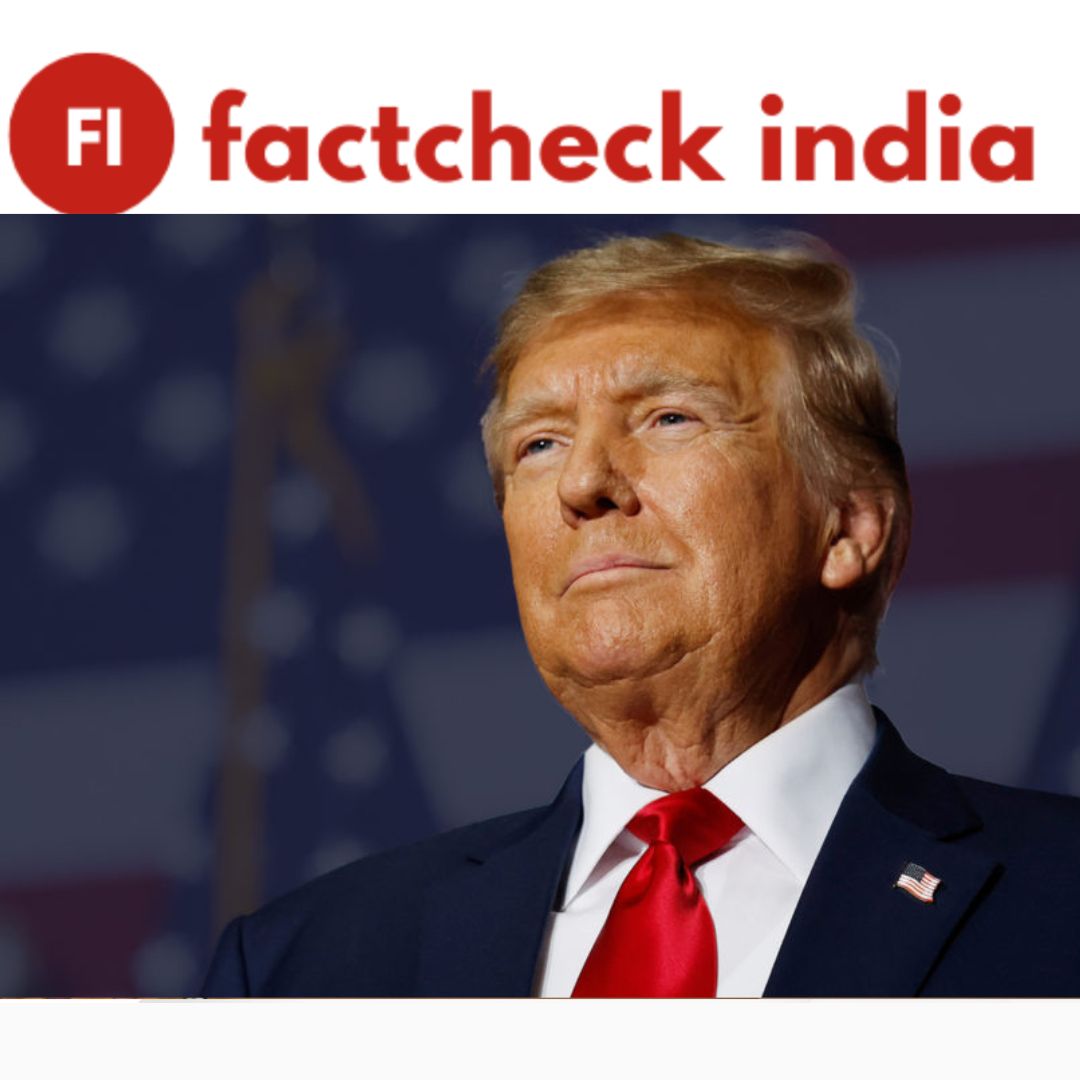
For years, Donald Trump has projected himself as a global dealmaker and a leader who can end wars with a handshake, a summit, or a dramatic headline. But on the ground, in the very regions he claims to have “brought peace,” the realities tell a different story. Conflict continues, tensions remain unresolved, and communities still live under the shadow of instability. This explainer breaks down why Trump’s peace claims often fail to match on-ground realities, and why conflicts persist long after the political announcements fade.
What Factcheck India Found?
Trump’s messaging has always relied on bold declarations like “historic peace,” “wars ended,” “conflicts resolved.” But announcing peace is not the same as building peace.
Sustainable peace requires:
- Long-term diplomacy
- Local negotiations
- Economic stability
- Security guarantees
- Trust between stakeholders
Most of these elements did not accompany Trump’s headline-driven agreements, leaving deep tensions untouched.
1. Middle East: Story About Unresolved Conflicts
Trump often credits himself for reducing tensions in the Middle East through diplomatic agreements.
However, symbolic pacts cannot erase decades-long geopolitical fault lines.
Why conflict still continues:
- Core disputes were never addressed
- Regional power rivalries remain intact
- Local political factions were excluded from talks
- Economic instability fuels unrest
Peace on paper did not translate into peace in people’s lives.
2. Afghanistan: Story About Withdrawal Without Stability
Trump announced he had “ended America’s longest war” by negotiating with the Taliban.
The problem? The deal never established a stable political roadmap.
What happened after:
- Violence surged
- Civilian insecurity increased
- The Afghan government weakened
- Extremist groups exploited the power vacuum
A withdrawal built on political timelines and not ground realities which left Afghanistan unstable.
3. North Korea: Story About Concrete Peace
Trump’s meetings with Kim Jong-un were historic in optics, but empty in outcomes.
Why peace did not hold:
- No disarmament commitments
- No monitoring or verification mechanisms
- No roadmap for long-term negotiations
- North Korea continued weapons development
Photo-op diplomacy did not translate into conflict resolution.
4. Real Peace Needs Architecture
In several regions, Trump claimed credit for de-escalation, yet local conflicts resumed because:
- Agreements lacked enforcement
- Stakeholders were not fully represented
- Regional distrust remained high
- Humanitarian issues were overlooked
Real peace needs architecture. Announcements alone cannot hold conflicts together.
Why Trump’s Peace Claims Keep Failing?
Across regions, a pattern emerges:
1. Peace was claimed too quickly
Complex conflicts were reduced to talking points.
2. Agreements were top-down
Local leaders, communities, and opposition groups were often excluded.
3. Long-term strategy was missing
Negotiating a deal is one thing — maintaining it is another.
4. The focus was optics, not implementation
Headlines overshadowed diplomatic groundwork.
5. Structural tensions remained
Ethnic, political, and territorial disputes cannot be resolved through a single meeting.
The Core Problem: Announced Peace is Not Real Peace
Peace is not a press conference as it is not a photo op nor it is not a slogan Peace is a process which is slow, layered, and built over time. When the process is skipped, conflicts return. Every time. Trump’s claims highlight a larger issue in global politics: Leaders often celebrate diplomatic victories before doing the hard work needed to sustain them.
Conclusion By Factcheck India
The conflicts Trump claimed to have solved continue today because the solutions were symbolic, incomplete, and disconnected from ground realities. The promise of peace may have generated attention, but without real diplomacy and local engagement, the underlying tensions were left untouched. In many places where peace was declared, conflict still thrives. And until the world moves beyond headline diplomacy, true stability will remain out of reach.