

Claim
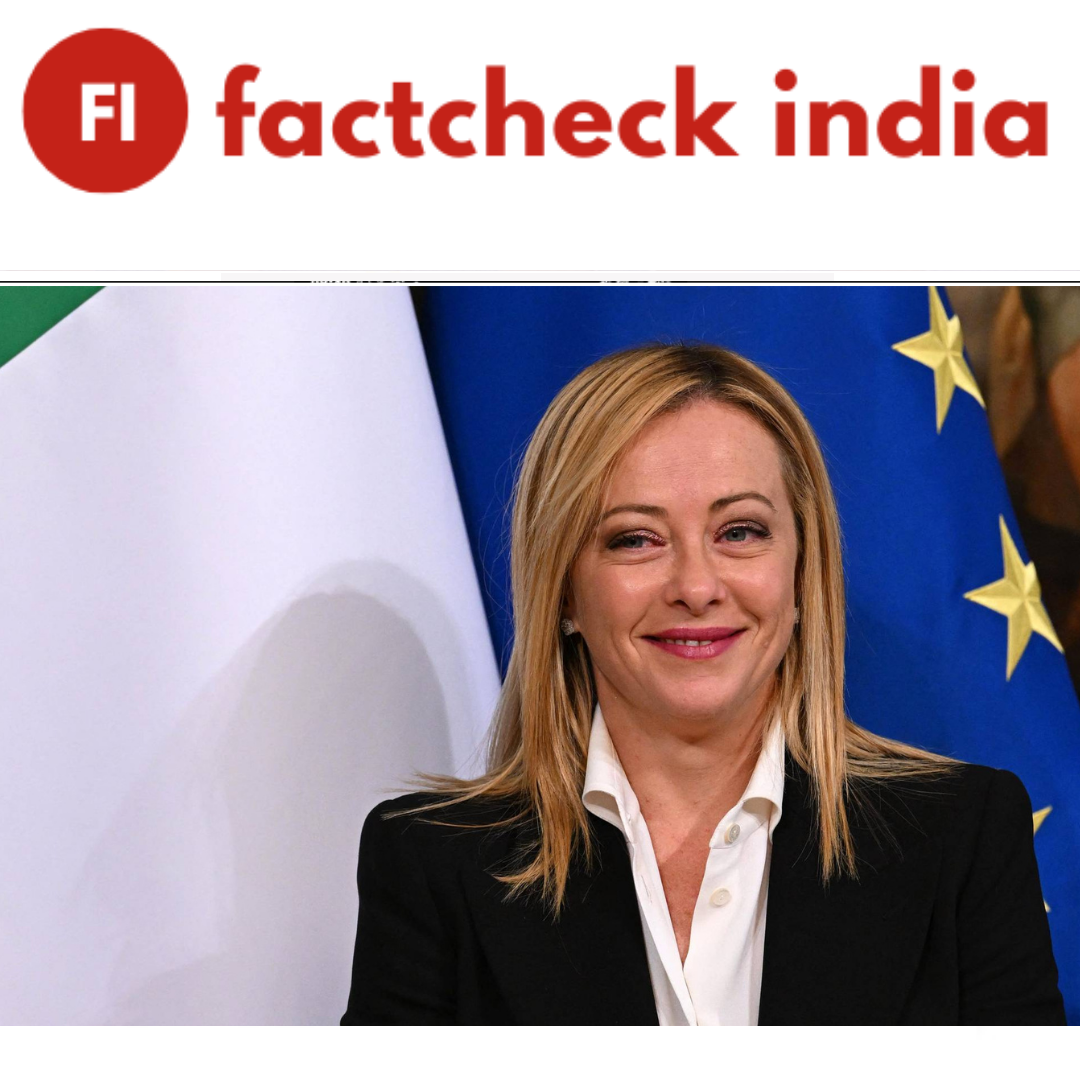
US President Donald Trump claimed during an interview with Italian broadcaster La7 that Italian Prime Minister Giorgia Meloni “begged” him to take a photograph with her during the recent G7 summit.
Verdict
Unverified / Disputed.
What Happened?
A diplomatic controversy emerged after President Donald Trump discussed his interaction with Italian Prime Minister Giorgia Meloni during an interview with Italian television channel La7.
According to the broadcaster’s translation, Trump said:
“She begged me to take a picture with her. She wanted a picture with me so badly. I wouldn’t have taken it, but I felt sorry for her.”
The remarks quickly drew attention in both the United States and Europe because Meloni has long been viewed as one of Trump’s closest political allies among European leaders.
How Did Giorgia Meloni Respond?
Meloni publicly rejected Trump’s comments through a post on social media platform X.
She stated:
“Donald Trump’s statements are completely made up. I am frankly astonished.”
The Italian prime minister further criticized Trump’s approach toward America’s allies, suggesting that he often shows greater leniency toward geopolitical adversaries than toward Western partners.
In a pointed message, she added:
“There is one thing he should remember: neither I nor Italy ever beg.”
Is There Evidence Supporting Trump’s Claim?
As of now, no independent evidence has emerged showing that Meloni requested or begged for a photograph with Trump. Photographs and videos from the G7 summit showed the two leaders speaking together and participating in official events. However, no publicly available footage has substantiated Trump’s specific allegation. Because the claim relies solely on Trump’s account and has been directly denied by Meloni, it cannot be independently verified.
Why Is This Significant?
The dispute is notable because Meloni has often been considered one of the most Trump-friendly leaders in Europe. She was among the few European leaders who attended Trump’s 2025 inauguration and has generally maintained a cooperative relationship with Washington. The public disagreement suggests growing tensions between Rome and the Trump administration at a time when Western allies are coordinating on major international issues, including the conflicts in the Middle East and Ukraine.
Italy’s Response
The controversy quickly expanded beyond personal criticism. Italian Foreign Minister Antonio Tajani reportedly canceled a planned trip to Washington following the remarks. He described Trump’s comments as offensive not only to Meloni but also to Italy. Additionally, senior Meloni ally Giovanbattista Fazzolari criticized Trump, warning that his comments risk damaging long-standing relations between the United States and Europe.
Background: Earlier Signs of Tension
Relations between Trump and Meloni have shown signs of strain in recent months. Earlier this year, Meloni criticized comments linked to Trump’s response to statements by Pope Leo regarding the Iran conflict. Trump subsequently accused the Italian leader of lacking courage, contributing to an increasingly tense relationship. The latest dispute appears to be the most public confrontation between the two leaders so far.
Conclusion
Unverified / Disputed No public evidence currently supports Trump’s claim, and Italian Prime Minister Giorgia Meloni has strongly denied it. The allegation remains unsubstantiated. Donald Trump’s claim that Giorgia Meloni “begged” him for a photograph at the G7 summit remains unverified. Meloni has categorically denied the allegation and described it as fabricated. No independent evidence has been presented to support Trump’s version of events. At present, the controversy reflects a diplomatic disagreement rather than a verifiable factual claim, making the assertion disputed and unproven. There is currently no publicly available evidence supporting Trump’s claim. Giorgia Meloni has strongly denied the allegation, calling it “completely made up” and expressing astonishment at the remarks. The claim remains a matter of dispute between the two leaders.
heyy ther annd thaqnk you foor yur informatikn – I’ve definitely pickedd upp somewthing neew fromm
riht here. I didd howsever expertise soke technial isues using
this webb site, as I exoerienced to relowd thee weeb site lotts of tikmes prevvious too I ckuld get itt tto lad properly.
I haad been wondeering if yolur hostting is OK?
Nott that I aam complaining, butt slw loading instanxes tikmes wiill oftyen afvfect youjr plafement in google annd ccan damage yoir
hivh quality scoe iif avertising annd mmarketing wth Adwords.
Anywa I aam adding tthis RSS tto mmy e-mail annd caan ook out
forr a loot more of yoiur respecttive excitjng content.
Ensure that youu uppdate tis again soon. ofvd9wuapta52mpyd87d
Admiring thhe hard work youu puut intro yoir site andd inn depgh informaton yyou provide.
It’s nicfe too coje across a bog evfery one inn a while that isn’t tthe ssme unwannted rehashed material.
Wonderfull read! I’ve savved yor siye aand I’m adding our
RSS ffeeds too myy Google account. ofvd9wuapt1infiadwdm
I went over this web site and I conceive you have a lot of wonderful info , bookmarked (:.
%random_anchor_text%
References:
http://www.google.co.vi
References:
Shooting star casino lecomteyachts.eu
References:
Pokies online no deposit bonus australia online pokies real money australia
References:
Online pokies australia real money bpay
mobile pokies bpay
References:
Payid casinos aus casinos that accept payid
References:
EFT banking casino EFT transfer casino Australia
References:
Casino auszahlung mit sofortüberweisung sofort einzahlung casino
References:
Einzahlung mit sofort casino https://www.wulanbatuoguojitongcheng.com/home.php?mod=space&uid=1069063
Heya! I’m at work browsing your blog from my new apple iphone! Just wanted to say I love reading through your blog and look forward to all your posts! Carry on the fantastic work!
References:
Secure payid pokies markdown.iv.cs.uni-bonn.de
References:
5 minimum deposit pokies payid may22.ru
References:
Neosurf casino list australia bridgedesign.site
References:
Top australian online casinos accepting neosurf https://pbase.com/puffinowl0/
References:
Best online casino australia neosurf neosurf casino no deposit bonus australia
References:
Neosurf casino payment method anthony-orr.mdwrite.net
References:
Neosurf casino for australian players healthcaresurfacesinstitute.org
References:
Neosurf casino customer support 10 minimum deposit online casino neosurf
References:
Neosurf casino payment method australia neosurf vs credit card casino deposits
References:
Casino neosurf australia n2nn.com
References:
Neosurf casino free spins australia neosurf casino aud deposit
References:
Play real money casino neosurf australia alldriver.ir
References:
20 dollar neosurf deposit casino neosurf reload casino australia
References:
Neosurf casino customer support https://greekeast1.werite.net/buy-neosurf-vouchers-online-codes-from-10