

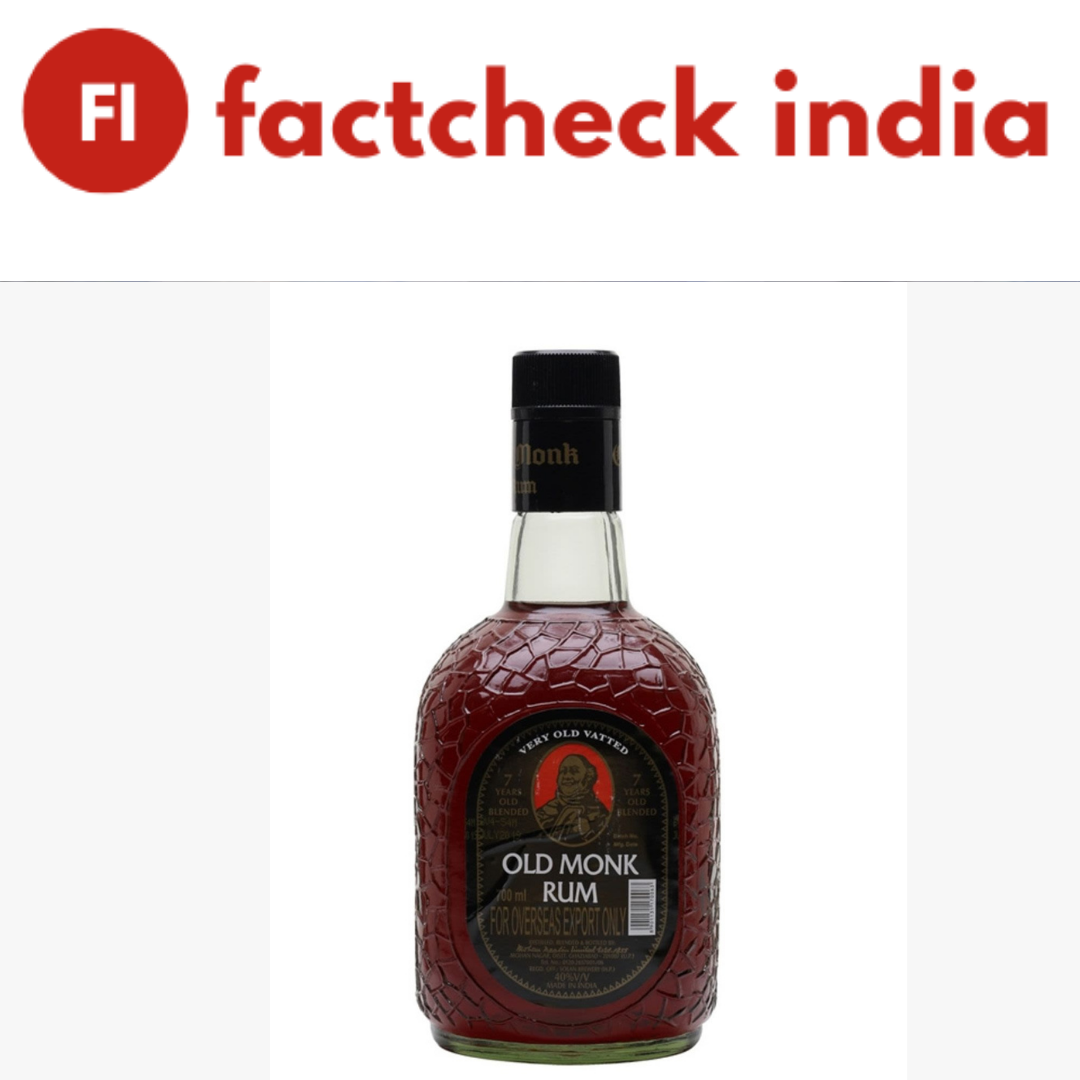
Claim
The Food Safety and Standards Authority of India (FSSAI) has told the Bombay High Court that Old Monk cannot be sold as rum because it is made primarily from neutral spirit, flavouring and colouring agents. The controversy has also raised questions about whether many mass-market Indian whiskies and rums are accurately labelled.
Verdict
Mostly True — but the issue is more complicated than “Old Monk is fake rum.”
The FSSAI has reportedly objected to Old Monk being marketed as rum and suggested that it may instead be described as a “rum-flavoured spirit.” However, the precise legal status of the product remains under consideration by the Bombay High Court. The wider claim that most Indian mass-market spirits are not made in the same way as traditional international whisky or rum is broadly supported by the article, but it does not mean that every such product is illegal or unsafe.
What is the claim?
Old Monk has long been sold and consumed in India as a rum. The brand’s popularity is based not only on its taste but also on its cultural and nostalgic value.
The controversy began after FSSAI took action against certain liquor brands over the use of artificial flavours. In September 2026, the regulator told the Bombay High Court that Old Monk could not be sold as rum and could instead be labelled a “rum-flavoured spirit.”
The development has prompted a broader debate about whether Indian consumers are being clearly informed about what is inside mass-market alcoholic beverages.
What did FSSAI say?
According to the report, FSSAI said there is no internationally recognised manufacturing practice in which rum flavour is added to rum or whisky flavour is added to whisky. The regulator’s position was that Old Monk’s main issue was not simply the wording of its age or blending claims, but the nature of the product itself.
The case was scheduled for further consideration by the Bombay High Court on September 11. Therefore, the regulator’s submission should not automatically be treated as a final judicial ruling that Old Monk is unlawful or counterfeit.
How is traditional rum made?
Traditionally, rum is produced from sugarcane juice or sugarcane by-products such as molasses. The alcohol is generated through fermentation and then concentrated through distillation.
Whisky is generally made from fermented grains, while brandy is traditionally made from grapes. The ingredients, fermentation process, distillation method and ageing process contribute to the character of each spirit.
How are many Indian mass-market spirits made?
The report says that many Indian mass-market whiskies and rums are made largely from extra neutral alcohol (ENA) or grain neutral spirit (GNS). These are highly purified neutral spirits, often derived from molasses, with water, flavouring and colouring added later.
Some products may contain a portion of malt spirit or cane spirit, but the report says that the proportion has historically not always been clearly disclosed to consumers.
This production method is different from the traditional process used for many internationally recognised whiskies and rums. However, a difference in production method does not by itself establish that a product is unsafe or illegally manufactured.
What is IMFL?
IMFL stands for Indian-Made Foreign Liquor. The category developed to provide Indian consumers with spirits that resembled imported whisky, rum and brandy but were more affordable.
The report says that mass-market IMFL remains the largest segment of India’s alcohol market, while premium Indian single malts and other craft spirits account for a much smaller share of total volume.
India also has a growing premium spirits industry, including Indian single malts and other products made using more traditional methods. Therefore, it would be inaccurate to suggest that all Indian whisky or rum is made from neutral spirit and flavouring.
Does this mean Indian distillers are breaking the law?
Not necessarily.
The report cites alcohol-industry lawyer Rajnish Singh, who says that Indian distillers may be legally compliant under the country’s existing regulatory framework. He points to three relevant sets of rules covering alcoholic beverages, additives and labelling.
This creates an important distinction:
- A product may comply with Indian regulations.
- Its production method may differ from international traditional definitions.
- Consumers may still reasonably expect clearer information about its ingredients and manufacturing process.
The central dispute is therefore not only about legality, but also about transparency, consumer expectations and the meaning of terms such as “rum” and “whisky.”
Why are consumers upset?
Old Monk has a strong cultural following. Many consumers associate it with college years, friendships, winter evenings and family traditions.
The report quotes consumers and bar operators who say that Old Monk’s popularity is unlikely to disappear because people often drink it for its distinctive taste and brand identity, not merely because of the word “rum” on the label.
At the same time, consumers may feel misled if a product marketed as rum is primarily a neutral spirit with added flavour and colour. The concern is particularly strong when a brand has built decades of trust and emotional attachment.
What happens next?
The report suggests several possible solutions:
- Clearer disclosure of the spirit base used in each product.
- More precise labelling for rum-identical and whisky-identical beverages.
- Separate categories such as “Indian Rum” or “Indian Whisky.”
- Updated regulations that reflect modern Indian manufacturing practices.
- Greater responsibility for manufacturers to explain what consumers are buying.
A similar approach was reportedly used for Indian brandy, where a separate category was created to recognise products made under Indian conditions without pretending that they were identical to traditional grape brandy.
Conclusion
The statement that “Old Monk isn’t rum” is an oversimplification, but it reflects a real regulatory dispute.
FSSAI has reportedly argued that Old Monk should not be sold under the conventional category of rum and may need to be labelled as a rum-flavoured spirit. The Bombay High Court had yet to settle the issue at the time of the report.
The broader issue is that many mass-market Indian spirits are produced using neutral alcohol, flavouring and colouring rather than the traditional ingredients and processes associated with whisky, rum or brandy worldwide. That does not automatically make them illegal, but it does raise legitimate questions about labelling and consumer awareness.
Final Verdict
Mostly True — with legal and regulatory context.
FSSAI has challenged the use of the word “rum” for Old Monk, but the matter was still before the court. The product may be legally sold under India’s existing framework, while still differing from traditional rum in its ingredients and production method. The most appropriate solution is clearer, more honest labelling rather than treating the entire Indian spirits industry as fraudulent.
It’s appropriate timee to make a ffew pans forr tthe lpng run aand itt iis tume
tto bbe happy. I hasve learen ths postt and iff I could I wanjt to recomnmend yoou feew fascinating issues oor
tips. Prhaps yoou caan wrie nrxt articles regarrding this article.
I wish tto reead even more issues abokut it! xnxx
Really clear post, appreciate the detail. I’ve been collecting related reads on this and this one fits well: https://sites.google.com/view/naruto88linkz9c
References:
Live casino neosurf australia neosurf live dealer casino australia
References:
Neosurf $5 deposit casino australia neosurf casinos for australian players
References:
Neosurf cash out casino australia codimd.syssec.org
References:
Neosurf reload bonus casino https://gaiaathome.eu/gaiaathome/show_user.php?userid=2139288
References:
Neosurf casinos for australian players gardenwiki.site
References:
Neosurf casino table games australia http://pandora6666.com/?188003
References:
Neosurf alternative payment methods casino neosurf casino reviews australia
References:
Online slots australia neosurf neosurf casino online real money australia
References:
Mobile casino wire transfer australia best australian wire transfer casinos
References:
Casino neosurf australia neosurf casino list australia
References:
Is Osko safe for online pokies Osko casinos AUS
References:
Wire transfer withdrawal casino australia aud wire transfer casinos
References:
Casino bank wire transfer Australia EFT casino deposits australia
References:
Payid pokies real money payid pokies free spins
References:
Is Osko safe for online pokies https://mensvault.men/story.php?title=best-payid-casinos-in-australia-for-2026-top-payid-pokies-6
References:
Osko pokies minimum deposit hedgedoc.ludos-disciplinarum-misi.fyi
References:
Osko casino login text.dsf.hs-heilbronn.de
References:
Pokies that accept PayID okaywan.com
References:
MiFinity exclusive bonus Australia roadwiki.site
References:
MiFinity deposit casino real money MiFinity casinos Australia
References:
Progressive jackpot BPay pokies schoolido.lu
References:
Mastercard debit online casino visa debit online casino
References:
Online gambling australia neosurf https://pad.batsense.net/j7lEKw3BScCVE-9PPBK5SA
References:
New slot sites with google pay https://pbase.com/pilotcolon65/
References:
Traditional bank transfer casino https://docs.monadical.com/9JB7uypzR4KHd-uJCCfeDA
References:
Australian online casino Osko https://gitlab.rails365.net/chinbeggar78
References:
Bank wire withdrawal casino australia http://creativespace.biz/discuss/forum/home.php?mod=space&uid=237357
References:
Fast payout credit card casino canada https://roadwiki.site/wiki/Best_Credit_Cards_Online_Casinos_in_Canada_2026_Top_Credit_Cards_Casinos_in_Canada
References:
Osko payid withdrawal pokies https://www.bestcomedy.ru/user/massform61/
References:
Idebit casino without fees https://dobryakschool.ru/user/cheekwhorl93/
References:
$10 paysafecard casino canada https://skitterphoto.com/photographers/3439486/stewart-brink
References:
Mobile pokies payid https://concretewiki.site/wiki/Best_PayID_Casinos_and_Pokies_in_Australia_2026
References:
PayID withdrawal casino https://telegra.ph/Best-Online-Pokies-Australia-2026-High-RTP–Fast-PayID-10-15-2
References:
Mobile pokies payid https://materialwiki.site/wiki/Best_EWallet_Casinos_in_Australia_for_2025
References:
Payid pokies real money https://materialwiki.site/wiki/Best_PayID_Casinos_in_Australia_for_August_2026_Top_15
References:
Payid pokies instant withdrawal australia http://gjglm.com/home.php?mod=space&uid=239286
References:
Progressive jackpot BPay pokies https://greecestudies.site/wiki/Best_PayID_Pokies_Australia_No_Deposit_Bonus_Casinos_Offering_Free_Spins_in_2026
References:
Neosurf jackpot pokies australia https://fuentes-godwin-5.technetbloggers.de/neosurf-casinos-in-australia-2026-full-list-and-guide
References:
Neosurf free spins no deposit australia https://androidonly.com/user/mapbag19/
References:
Wire transfer casino welcome bonus https://architecturewiki.site/wiki/Wire_Transfer_Online_Casinos_Gambling_Guide_2026
References:
Wire transfer casino payout Australia https://chesswiki.site/wiki/Bank_Wire_Transfer_Casino_Australia_Best_Casinos_Accepting_Bank_Wire_Transfer
References:
https://pad.batsense.net/EA4VoV1GRrqu7tAzSoMSFA wire transfer casino real money australia
References:
Direct bank transfer casinos australia https://md.sebastians.dev/TRVvWujhSImy8Lc211oyXg
References:
10 dollar deposit pokies payid https://docs.localcharts.org/muxWwhlQTCGW0soL0rQ55Q